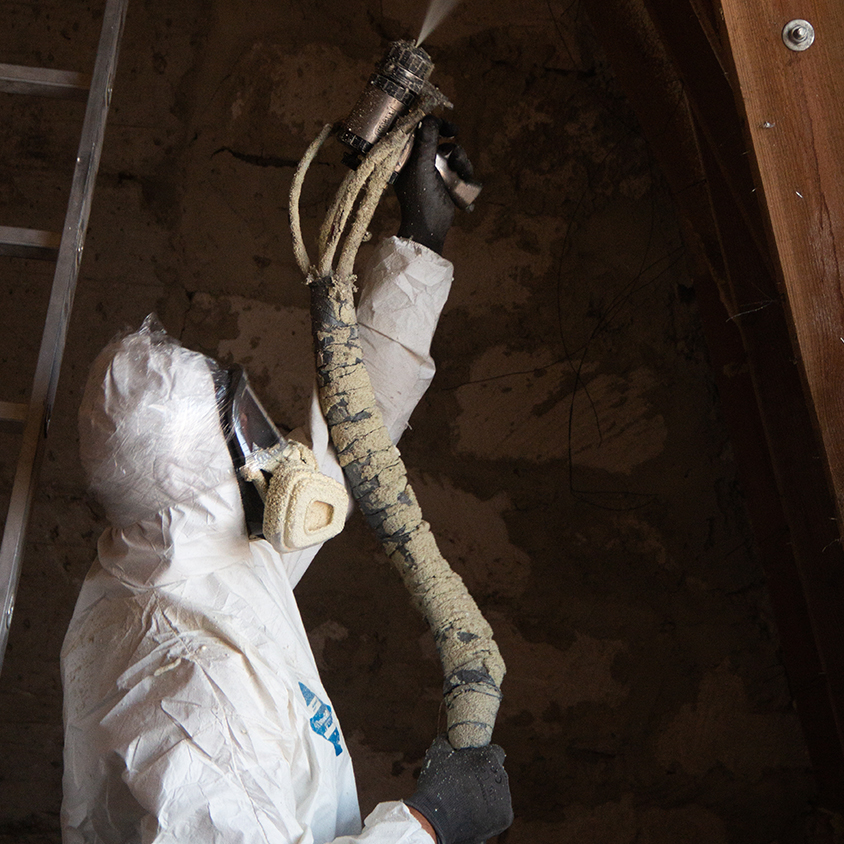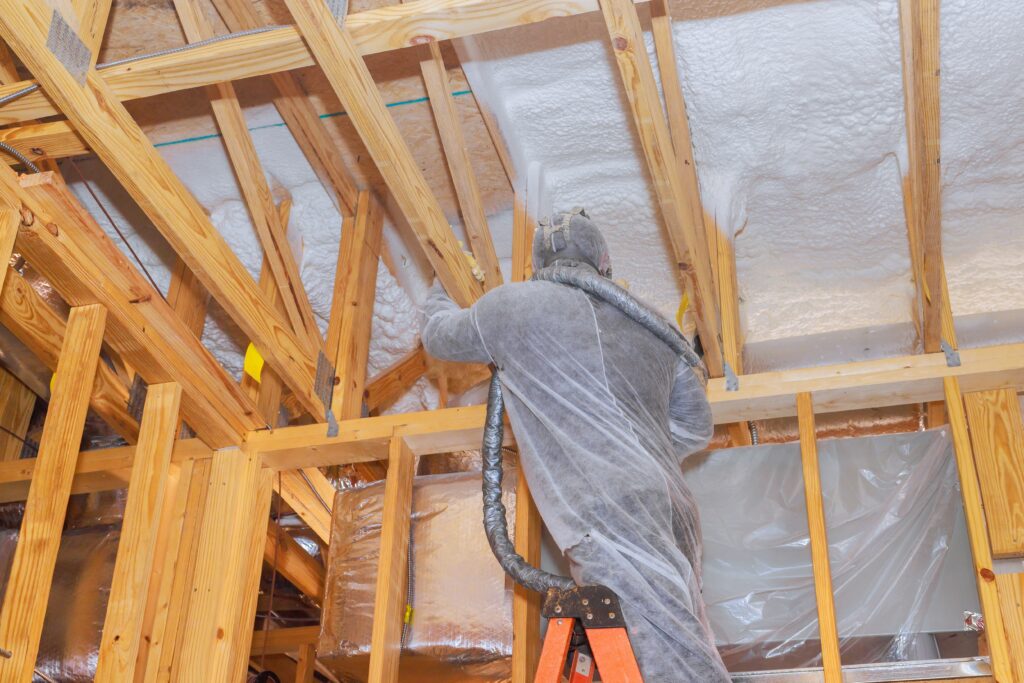
Spray foam insulation has become one of the most talked-about options for homeowners and contractors looking to maximize energy efficiency and long-term building performance. But it isn't the right choice for every situation, and the cost can give some homeowners pause. Before you commit, it helps to understand exactly what spray foam is, how it compares to other insulation types, and whether it makes sense for your specific home and climate.
Here in Texas, summers push attic temperatures well past 130 degrees. Energy bills can skyrocket without proper insulation, which is why choosing the right product matters more than in other parts of the country. RM Insulation has been helping Texas homeowners reduce their energy bills and enjoy cooler homes for almost 30 years and we can help you too. Give us a call today at (214) 629-2669 and let us help you with your insulation needs.
What Is Spray Foam Insulation?
Spray foam insulation is a two-component chemical mixture that expands on contact to fill gaps, cracks, and cavities in walls, ceilings, floors, and other building assemblies. Unlike traditional insulation materials that simply slow heat transfer, spray foam creates both an insulating layer and an air barrier simultaneously, which is a key part of what makes it effective.
How Spray Foam Works
When the two chemical components, typically polyol resin and isocyanate, are mixed at the spray tip, they react and expand rapidly. The foam fills irregular spaces and adheres to most surfaces, hardening into a solid layer that resists air movement and heat transfer. The expansion ratio and resulting properties differ depending on whether you are using open-cell or closed-cell foam.
Open Cell vs. Closed Cell Spray Foam
These are the two main categories of spray foam, and they serve different purposes:
Open-cell spray foam expands significantly and has a softer, spongy texture. It has a lower R-value per inch (typically around R-3.5 to R-4) and is vapor permeable, meaning moisture can pass through it. It is generally less expensive than closed-cell and works well for interior applications like interior walls and attic rafters in conditioned spaces where budget is a consideration.
Closed-cell spray foam is denser and more rigid, with a higher R-value per inch (typically R-6 to R-7). It acts as both an air barrier and a vapor barrier, making it significantly more effective in high-humidity environments or areas with direct moisture exposure. In Texas, closed-cell foam is often the preferred choice for crawl spaces, exterior walls, and any area where moisture intrusion is a concern.
Benefits of Spray Foam Insulation
Spray foam insulation offers a modern, high-performance solution for homeowners looking to improve comfort, efficiency, and durability. Its unique expanding properties allow it to outperform traditional insulation in several key areas.
Energy Efficiency and Air Sealing
One of the most significant advantages of spray foam is its ability to seal air leaks completely. Traditional insulation materials like fiberglass batts slow heat conduction but do nothing to stop air movement through gaps and penetrations. Spray foam expands into every crack and crevice, creating a continuous thermal envelope that dramatically reduces the load on your HVAC system. For Texas homeowners running air conditioning for eight or more months a year, that efficiency gain translates directly into lower monthly utility bills.
Moisture and Sound Control
Closed-cell spray foam acts as a vapor barrier, which is particularly valuable in humid Texas climates where moisture infiltration can lead to mold growth and structural damage. Open-cell foam, while vapor permeable, still provides meaningful sound dampening, making it a popular choice for interior walls between living spaces.
Long-Term Performance
Spray foam does not sag, settle, or degrade the way fiberglass batts can over time. Once cured, it maintains its shape and performance characteristics for the life of the building. It also does not provide a food source for mold or pests, which adds another layer of long-term durability.
Drawbacks of Spray Foam Insulation
While spray foam insulation offers strong performance benefits, it is not the right fit for every home or budget. Understanding the potential drawbacks can help homeowners make a more informed decision before committing to installation.
Higher Upfront Cost
Spray foam is one of the more expensive insulation options on the market. Depending on the type and application, it can cost two to three times more than fiberglass or blown-in insulation per square foot. For homeowners working with a tight renovation budget, that upfront cost can be a significant barrier even if the long-term savings justify it over time.
Installation and Safety Concerns
Spray foam must be installed by trained professionals using proper equipment and protective gear. During installation, the chemicals involved can be hazardous if inhaled, and the space must be properly ventilated and vacated. Once fully cured (typically 24 hours), spray foam is considered safe, but improper mixing ratios or application can leave uncured foam that continues to off-gas. This is one of the most important reasons to work with an experienced, reputable installer.
Spray Foam May Not Be Ideal for Every Home
Spray foam's permanent, rigid nature can actually work against you in certain situations. It makes future repairs or modifications to walls and cavities more difficult and expensive. Spray foam also cannot be installed against certain materials without proper preparation, and in older homes with unconventional framing or construction, achieving consistent coverage can be challenging.
When Spray Foam Makes the Most Sense
Spray foam insulation delivers the greatest value when it is applied in the right environments and building conditions. Knowing where it performs best and where it may fall short can help homeowners make a more strategic investment.
Best Applications for Texas Homes
Texas's extreme heat, high humidity in coastal and eastern regions, and wildly variable seasonal temperatures make spray foam a strong choice in the following locations:
- Attic roof decks and rafters, where creating an unvented, conditioned attic space dramatically reduces heat gain.
- Exterior walls in new construction, where continuous insulation improves performance and building envelope tightness.
- Crawl spaces in humid areas of Texas, where moisture control is as important as thermal performance.
- Around HVAC ducts, plumbing penetrations, and electrical boxes to eliminate air infiltration points.
- Metal building insulation in commercial or agricultural structures, where condensation and air sealing are persistent challenges.
- Garage ceilings and bonus rooms above garages, which are notoriously difficult to insulate effectively with traditional materials.
Situations Where It May Not Be the Best Choice
Spray foam is not always the optimal answer. It may not be the best fit when working with a strict renovation budget, in areas that will require frequent access for maintenance or repairs, in applications where a vapor-permeable assembly is intentionally designed, or in historic homes where preserving original wall cavities is a priority.
If you need help determining if spray foam insulation is right for you, or you have already decided to go with a different type, call RM Insulation today at (214) 629-2669 and we’ll help you meet your insulation needs.
Spray Foam Cost Considerations
Understanding how spray foam insulation is priced and how it delivers value over time can help homeowners make a more informed financial decision.
What Affects Pricing
Several factors influence the total cost of a spray foam insulation project:
- Open-cell vs. closed-cell foam: Closed-cell foam costs more per board foot due to its higher density and performance characteristics.
- Size of the area being insulated: Larger projects benefit from economies of scale, while small or complex jobs often carry higher per-square-foot costs.
- Accessibility of the space: Crawl spaces, tight attic areas, and difficult-to-reach cavities require more labor time and equipment setup.
- Labor and prep requirements: Existing insulation removal, surface preparation, and masking all add to the total project cost.
Cost vs. Long-Term Value
The upfront premium for spray foam often pays off over time through reduced energy bills, fewer HVAC repairs, and extended equipment life. In a Texas home running air conditioning heavily through the summer, energy savings can be significant enough to recover the cost difference within a reasonable number of years. It is worth calculating the long-term value rather than comparing upfront costs alone.
Insulation Alternatives to Spray Foam
Spray foam is not the only quality insulation option. Depending on your goals and budget, alternatives worth considering include:
- Blown-in fiberglass or cellulose: A cost-effective option for attic floors that provides good thermal performance and can be installed quickly in accessible spaces.
- Fiberglass batts: The traditional choice for wall cavities and standard framing, offering adequate performance at the lowest price point.
- Rigid foam board: A good option for continuous insulation on exterior walls, under slabs, or in areas where spray foam's expansion isn't practical.
- Reflective radiant barriers: Particularly relevant in Texas attics, radiant barriers reduce heat gain from the roof deck without replacing traditional insulation.
How to Choose the Right Option
The right insulation depends on where you are insulating, your performance goals, your budget, and the specific characteristics of your home. A mixed approach, such as spray foam in the attic combined with blown-in cellulose in the attic floor, often delivers the best balance of performance and value.
Talking through your specific situation with a knowledgeable insulation contractor is the most reliable way to make the right call. RM Insulation offers a variety of different insulation services to suit your needs.
How RM Insulation Can Help
At RM Insulation, we work with Dallas and Fort Worth homeowners and businesses to identify the insulation solution that makes the most sense for their specific needs, budget, and building. Whether you're interested in spray foam insulation or want to explore what other options might serve you better, our team brings the experience and honest guidance to help you make a confident decision.
Get the Right Insulation for Your Home
We serve customers throughout the Dallas-Fort Worth area, and offer a full range of residential and commercial insulation services. Contact RM Insulation today at (214) 629-2669 to schedule a consultation and get started on your journey to a cooler home and lower energy bills.